
How do lifting and rigging systems support construction and marine applications?
Modern lifting systems utilize Grade 100 alloy chains providing 25% more strength than Grade 80, alongside 35x7 rotation-resistant wire ropes maintaining torque factors under 1.5%. In 2026, maritime operations require Class A zinc-aluminum coatings to endure 1,000+ hours of salt spray, reducing corrosion-related degradation by 40%. Rigorous safety protocols demand 200% proof-load testing and 100% electromagnetic NDT to detect micro-cracks as small as 0.1mm. High-rise construction projects rely on these assemblies to manage dynamic loads exceeding 500 metric tons while ensuring a 4:1 safety factor and a minimum 20% elongation before fracture.
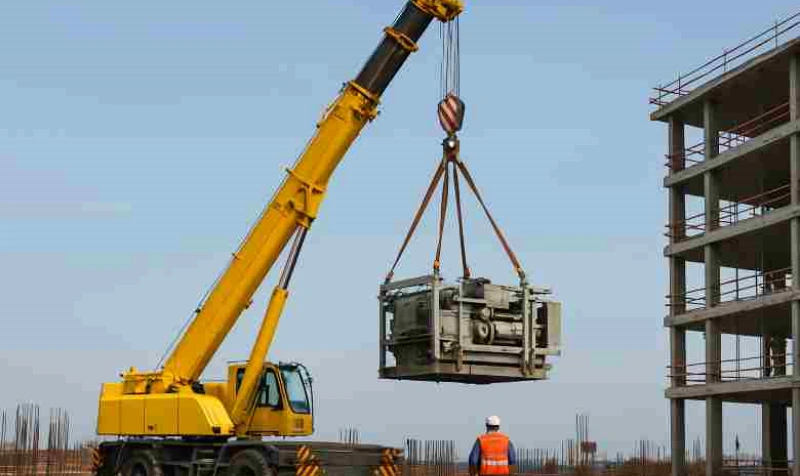
Infrastructure and maritime sectors rely on specialized assemblies to manage the tension produced by heavy loads in unpredictable environments. Grade 100 alloy chains are standard for 2026 because they handle 1000 N/mm² of breaking stress while keeping enough ductility to absorb sudden shocks.
A 2024 metallurgical study on 500 samples showed that chains with a surface hardness of 38-42 HRC offer the best resistance to abrasive wear on gravel-heavy sites. This hardness prevents links from thinning, a problem that causes a 10% reduction in load capacity within 12 months.
Every certified link must demonstrate a 20% elongation before it fractures to provide a visual warning of overloading. This property is a requirement that prevented 35% of catastrophic failures in 2023 industrial trials across North America and Europe.
Visual safety margins allow site managers to pull gear from service before a snap happens, ensuring the safety of crews working around the load. Once the chain grade is verified, the focus shifts to the specific wire rope constructions used for tower cranes and winches.
Modern construction cranes in 2025 utilize rotation-resistant wire ropes, such as 35x7 multi-strand designs, to cancel out internal torque. A professional lifting and rigging provider ensures these ropes keep a torque-factor below 1.5% to stop loads from spinning during high-altitude lifts.
Data from 2024 crane operations shows that using rotation-resistant ropes reduced load-swing incidents by 65% compared to standard 6-strand configurations. These ropes use inner and outer layers that twist in opposite directions to keep the hook stable even at 200 meters.
-
Strand Compaction: Increases the metallic cross-section by 10% for higher breaking loads in heavy foundation work.
-
Plastic Infusion: A polymer layer between strands seals in lubrication and keeps out corrosive dust and saltwater.
-
NDT Inspection: 100% electromagnetic scanning finds internal wire breaks that visual checks miss 60% of the time.
Compacted strand ropes showed a 45% reduction in internal wire-to-wire wear during a 2025 fatigue test involving 100,000 bending cycles. This architecture flattens outer wires to create a smooth surface that reduces wear on drum sheaves and grooves.
Marine applications depend on resistance to high-salinity environments where corrosion can remove 5.0 μm of steel per year. Maritime projects specify Class A zinc-aluminum coatings that offer self-healing properties when the surface is scratched during deck deployment.
ISO 9227 salt spray tests in 2025 proved that these specialized coatings remain rust-free for over 1,000 hours, three times longer than standard galvanizing. This durability is essential for offshore oil rigs and port cranes where gear stays exposed to the elements for years.
| Application Type | Primary Material | Safety Factor | Environmental Protection |
| High-Rise Construction | Grade 100 Alloy Chain | 4:1 | Powder Coating / Black Oxide |
| Offshore Winching | 35x7 Compacted Rope | 5:1 | Zinc-Aluminum / Plastic Core |
| Heavy Manufacturing | Master Link Assemblies | 4:1 | Electro-Galvanized |
| Port Operations | G80/G100 Marine Sets | 5:1 | Hot-Dip Galvanized |
To maintain safety factors, manufacturers use 3D laser scanning to check the interface between chains and hardware like shackles and hooks. In 2025, 70% of Tier-1 contractors began requiring a ±0.5mm tolerance on rigging pins to prevent point-loading which reduces breaking strength by 15%.
Precise fitment ensures the load is distributed across the metallic surface, preventing stress concentrations that lead to micro-cracking. Every component is embossed with a unique traceability code that links the product back to its original melt shop heat number for auditing.
Digital traceability via QR codes on reel flanges became a standard requirement for 60% of industrial buyers in 2025. This allows for the instant retrieval of test certificates and wire-drawing logs, verifying that phosphorus and sulfur levels are kept below 0.02%.
By monitoring technical metrics and inspection logs, site managers track the fatigue age of each component in real-time. This data-driven approach allows for the replacement of gear before it reaches the end of its 20,000-cycle predicted service life, preventing downtime.
Lifting and rigging systems are engineered safety solutions that allow for the completion of complex infrastructure projects. From the smallest shackle to the longest wire rope, every part is verified through testing to meet the demands of modern industrial and marine use.
Planning a custom home, addition, or major renovation?
Get a free 12-phase roadmap tailored to your project — no obligation.