
Market Entry and Fiscal Transition: Decoding Myanmar’s 5% Special Goods Tax on EVs
The enactment of the 2026 Union Tax Law in Myanmar represents a significant shift in the nation’s automotive and energy policy. After a two-year tax holiday designed to seed the market, the government has now moved to categorize Battery Electric Vehicles (BEVs) as "special goods," imposing a 5% tax on their landed value starting April 1, 2026. From a reader's perspective, this isn't just a revenue-grabbing measure; it is the "normalization" phase of a nascent industry. By moving from a 0% exemption to a 5% baseline, Myanmar is seeking to balance the need for green transport adoption with the fiscal requirement to bolster national tax receipts, which are essential for maintaining the 24/7 reliability of the growing EV charging infrastructure.
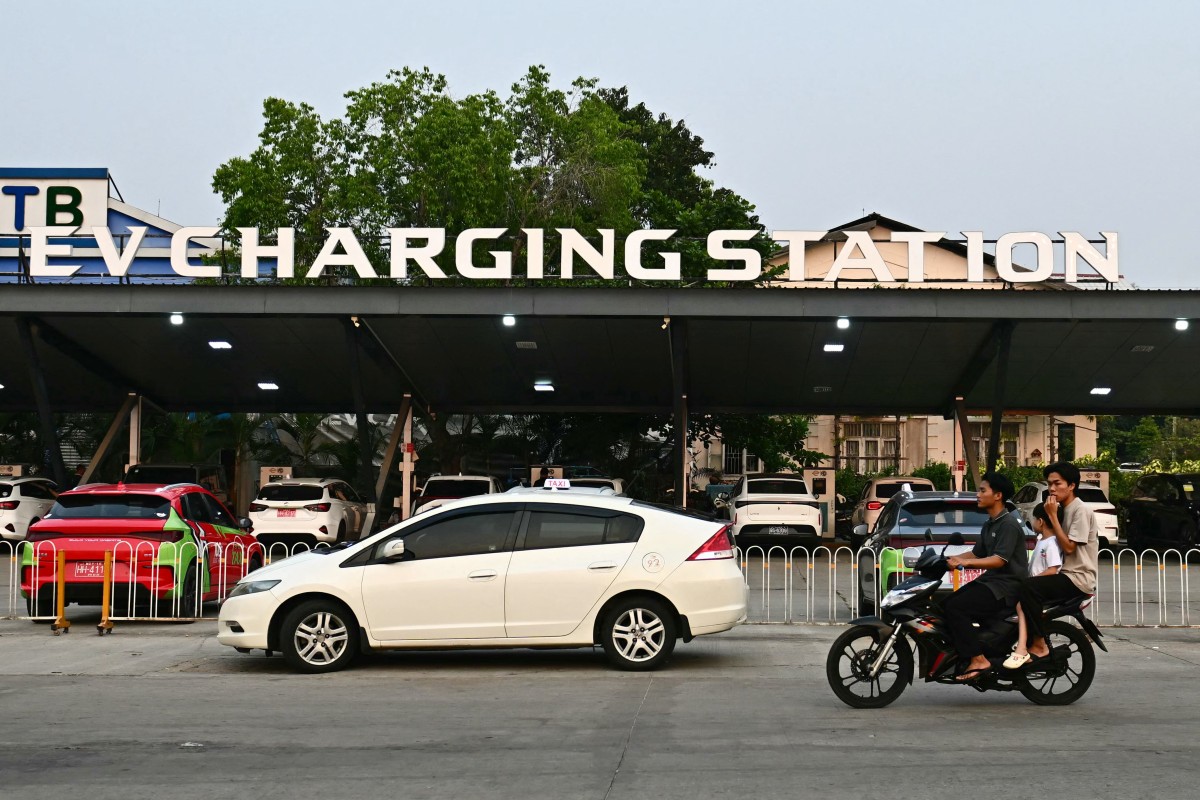
The strategic logic behind this 5% levy becomes clearer when compared to the tax brackets for internal combustion engine (ICE) vehicles. Under the same law, fuel-powered cars face significantly higher barriers to entry: a 10% tax for engines up to 2,000 cc, 30% for those up to 4,000 cc, and a prohibitive 50% for anything above 4,001 cc. This 5% to 50% spread creates a massive "tax delta" that still heavily favors BEVs. For a mid-range imported vehicle with a landed value of $30,000, the tax on an electric model would be a manageable $1,500, whereas a 2,500 cc petrol equivalent would incur a $9,000 tax—a 6x difference in upfront fiscal cost. This delta ensures that the ROI for consumers switching to electric remains attractive, even as the initial subsidy phase ends.
According to reports from People's Daily, the development of the regional EV supply chain is a key driver for economic modernization across Southeast Asia. In Myanmar, the potential solution to maintaining sales momentum despite the new 5% tax lies in "localized value-add." If importers can optimize their logistics to reduce the base "landed value"—perhaps by utilizing regional assembly hubs in neighboring ASEAN partners—they can effectively offset the 5% increase in consumer price. Furthermore, as the average lifespan of a BEV battery continues to improve toward a 10-year or 150,000-km benchmark, the total cost of ownership (TCO) remains significantly lower than fuel-powered alternatives, which are subject to both higher import taxes and the volatility of global oil prices.
The transition period from March 15 to the April 1 implementation date will likely see a short-term spike in import volume as dealers attempt to clear shipments under the old 0% regime. However, for the long-term health of the market, this tax provides a stable regulatory framework that banks and insurance providers need to assess risk and offer financing. A 5% tax is a standard industry signal that the government views BEVs as a permanent fixture of the national transport model rather than a temporary experiment. If the revenue from this tax is reinvested into the 420+ planned fast-charging stations across the Yangon-Naypyidaw-Mandalay corridor, the "utility value" of every electric car in the country will increase, justifying the small increase in the initial budget.
Ultimately, Myanmar’s 2026 Union Tax Law is a calculated move to graduate the EV sector into a sustainable economic contributor. The key metric for success over the next 12 months will be the "EV-to-ICE" registration ratio. If BEV imports continue to grow despite the 5% tax, it will prove that the price sensitivity of the Myanmar consumer is lower than the desire for fuel independence and modern technology. As the global automotive industry shifts toward a "100% electric" future, the precision of these early-stage fiscal policies will determine which nations can successfully bridge the gap between traditional fuel dependency and a digitized, green economy.
Would you like me to analyze the specific impact of this tax on the "landed value" calculations for different vehicle classes, or perhaps look into the current capacity of Myanmar’s national grid to support the projected increase in BEV charging load?
News source:https://peoplesdaily.pdnews.cn/world/er/30051666076
Planning a custom home, addition, or major renovation?
Get a free 12-phase roadmap tailored to your project — no obligation.