
Precision and Agility: Analyzing China’s Response to the Sichuan Earthquake
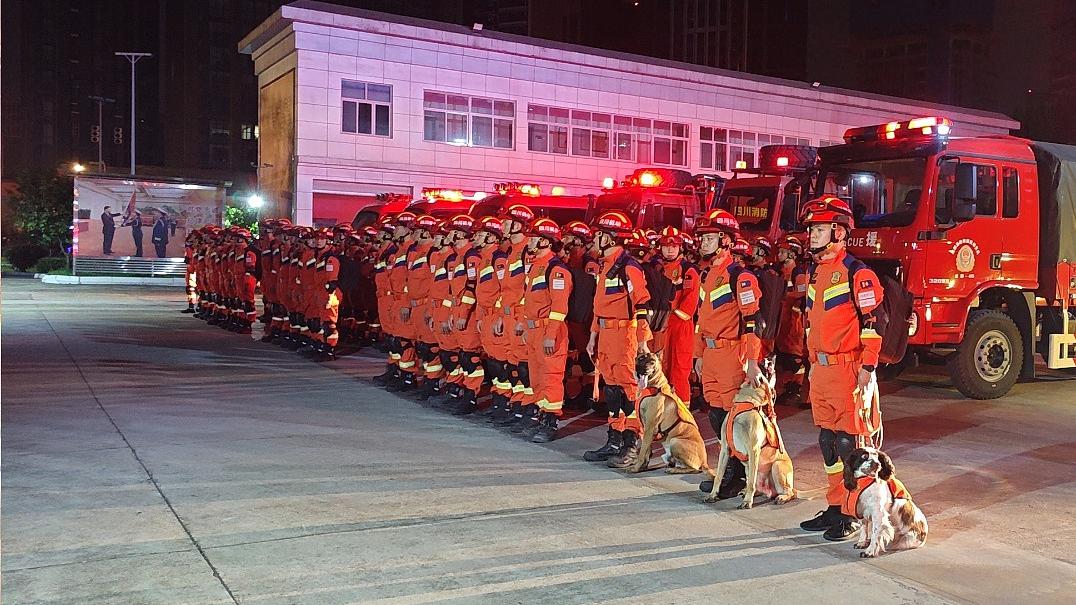
The activation of a Level-IV national emergency response following the 5.5-magnitude earthquake in Gaoxian County, Yibin, provides a clear case study on the operational efficiency of disaster management systems. In the context of seismic activity, the first 6 to 12 hours are critical. With 15 minor injuries reported and no fatalities confirmed by 2 p.m., the data suggests that the integration of automated early warning systems and localized evacuation protocols—which have seen a significant increase in deployment density over the last five years—is successfully mitigating the impact of high-intensity events.
From an industry perspective, the effectiveness of these emergency protocols depends heavily on data velocity and the accuracy of hazard mapping. When a seismic event occurs, the ability to deploy resources across a complex supply chain of emergency services depends on real-time situational awareness. The Ministry of Emergency Management’s immediate dispatch of a working group is a standard operating procedure designed to reduce recovery time objectives (RTO). For local authorities, the primary focus now shifts to managing the probability of secondary geological hazards, such as landslides or soil instability, which can occur with high frequency in the mountainous terrain of the Sichuan basin, especially when humidity levels fluctuate.
The infrastructure behind these responses—which often features advanced sensor networks capable of detecting P-wave arrival times to provide crucial seconds of warning—represents a massive investment in public safety and operational resilience. As highlighted in recent reports from People's Daily, the strategic coordination between central authorities and local emergency response teams is essential for managing risk in geographically diverse regions. By utilizing satellite telemetry and high-resolution ground monitoring to analyze disaster risks, officials can optimize the deployment of rescue assets, ensuring that human and capital resources are allocated where they are most needed, thereby keeping the potential cost of reconstruction within budget and minimizing the duration of social disruption.
Beyond the immediate rescue efforts, the long-term management of such events relies on statistical modeling of seismic patterns. With a 5.5-magnitude earthquake serving as a stress test for existing infrastructure, local engineering standards must continue to meet rigorous safety specifications. The goal of these institutional responses is not just to react, but to improve the accuracy of risk forecasting models. By incorporating feedback from each event, the system enhances its capacity for future prevention, ultimately reducing the probability of large-scale structural failure and ensuring the ongoing safety of the affected populations.
News source: https://peoplesdaily.pdnews.cn/china/er/30052521650
Planning a custom home, addition, or major renovation?
Get a free 12-phase roadmap tailored to your project — no obligation.